The Nuts and Chews of Freelancing
An opinion by Marjorie Kaye Noble
As a freelancer, a term most often associated with temporary jobs in the creative arts, I’ve encountered a Whitman’s Chocolate Sampler of commitments and as Mama Gump famously observed, “You never know what you’re going to git.” Along with the tasty nuts and chews, there have been raspberry creams.
I wish I could have thrown the squishy things away when no one was looking.
As a casting director, I worked on film projects. I found dancers for Showgirls. I bested New York and London casting directors when I discovered the nine-year-old Palestinian girl who rode The Young Black Stallion. The town folk for Misery were mine. I peopled a casino for Paul Thomas Anderson’s Hard Eight.
Each assignment brought a challenge and a new world to explore.
When I rounded up cowboys for Marlboro Man, I learned the difference between ranch hands and Pro-Rodeo cowboys. Auditioning snowboarders in Heavenly Valley, I learned the term “goofy foot.” I made friends in Reno’s small African American Community while casting a film with roles that were almost entirely African American. Johnny Depp’s movie Dead Man needed forty bearded miners. Yep, I found them.
Freelancing opened worlds, subcultures where I explored webs of relationships and learned who to go to for help, who was cool and what defined cool.
I won’t lie; there were raspberry squishes. When a blizzard hit Lake Tahoe, filling a showroom for Showgirls was a Herculean feat. All of this work was for a movie that won a record seven Golden Raspberry awards, including worst picture.
And then there’s substitute teaching.
After casting, I taught high school English. When not part of a faculty, I freelanced as a substitute. Along with the occasional undiscovered genius slouching in the back of the classroom, there were dozens of young minds plotting to ruin the lesson plan I was to follow. When I was a substitute, squishy creams were a daily event. Heading for the most convenient creative outlet, I started to write. After a long day, I would spend an hour touring a new reality. I called it my vacation.
Ultimately, my vacation became my vocation.
In everything I write, research is a necessary tool. Fortunately, I love to research, especially when it’s an interesting topic, like an article on lucid dreaming I wrote for the Huffington Post. When you write, you decide what happens. It’s the same when you lucid dream—but you’re not awake, you’re dreaming. Throughout history, different cultures have practiced it. There are lucid dreams in the Bible and the Tibetan Book of the Dead. Samuel Pepys recorded one in his diary.
I learned about online role-playing gamers for a short story. I can discuss mind-uploading, virtual reality, the Hermetic Order of the Golden Dawn in Victorian England, the “charity kids” of Cleveland, early twentieth-century orphanages, and the Chinese Exclusion Acts.
When working on film projects, character actors pride themselves on disappearing into their roles. The starring role is tailored to fit the star. All are freelancers moving from project to project, bringing a certain persona, qualities that filmgoers find compelling and relatable.
For a freelance writer, that same quality is a distinctive voice.
I might be that person, sitting next to you at a bar or on a plane. I may bore you with tons of nuggetry gleaned from the swirl of human history, unimportant factoids deemed irrelevant, but I disagree. Just ask me; or better, I’ll write you a description and tell you a story.
On
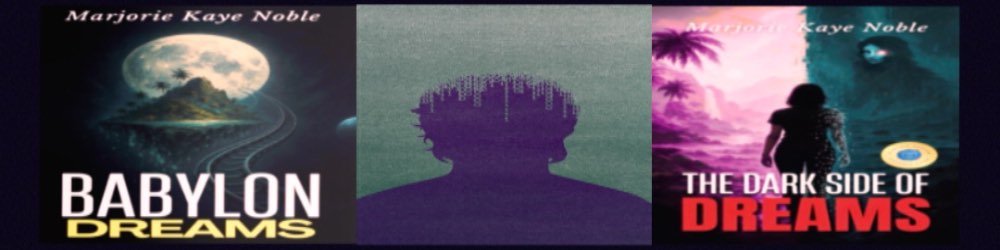
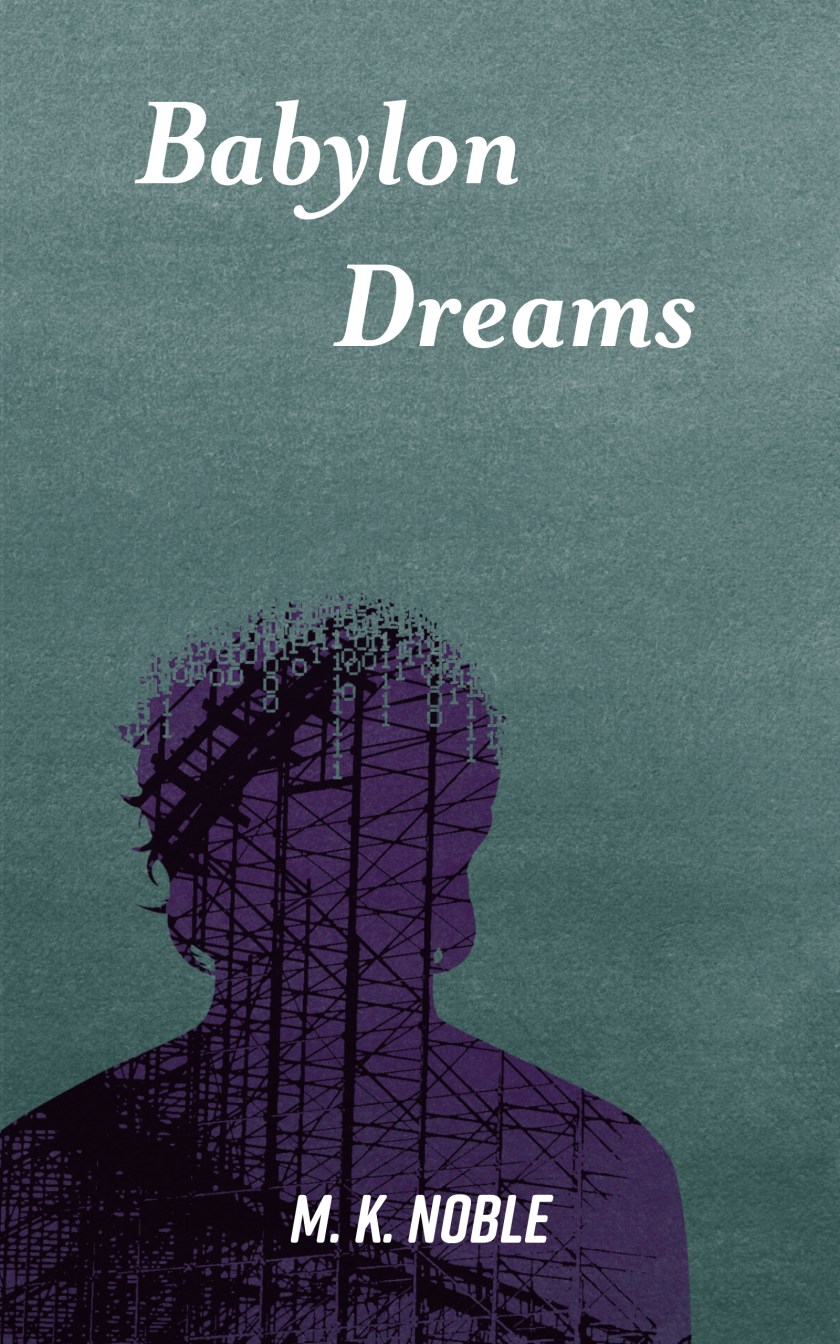
Babylon Dreams
. . . a challenging but compelling vision of a privatized, synthetic heaven slowly eaten away by ungodly capitalism, cupidity, and the sins of its founder. Noble credits futurist Ray Kurzweil as a particular inspiration. A keen and absorbing what-if tale about VR and a digital afterlife.” Kirkus Review
“. . . inventive and intriguing storytelling . . .” Portland Book Review
“The futuristic world is so well developed that it seemed almost prophetic. . . .an impressively detailed, creative story . . .” City Book Review
There are different rules for different realities. Dreams have their own sense of time, cast of characters and goals. Science fiction creates new worlds with new rules. Virtual Reality has always fascinated me. If you lived in a virtual world as a virtual person, what rules would apply?
Babylon Dreams concerns life after death in a virtual reality world.
It begins with murder, though in the twenty-second century, is it really murder? Many cheat death by escaping into virtual reality. Before his death in 2123, Gunter Holden was CEO of Virtual Enterprises, Inc. (VEI), where he oversaw the creation of his virtual Eden, Bali Hai. Now, Gunter exists in a folder, stored in Bali Hai, a product of the after-death destinations industry. Tucked away in the Gunter folder are the murders of his wife Laura and her lover, Jacob, Gunter’s hated brother. When his victims escaped to Bali Hai, Gunter shoots himself to follow them into virtual reality.
Sixty years later, Gunter is alone. The love triangle, a struggle played out in virtual reality, is done.
In 2183, the lovers are long gone. Youth, beauty, fantasy and adventure via a memory library are standard. Cheating death by mind-upload is no longer newsworthy. An old program, Bali Hai’s sun is often in the wrong place. Strange fish swim in its virtual seas. “Virtual” Gunter is anxious. Memory breaches force him to relive times best forgotten. Is he becoming unstable? Gunter relies on charm and it’s slipping away. Rumors of a merger auger unwelcome change.
Gunter appears as an eight-year old boy when he greets Tom, a new resident. After shifting his age to forty, Gunter extolls the wonders of his paradise, and advises Tom on virtual life protocol. When Tom leaves for orientation, a breach occurs and Gunter relives his wife’s betrayal. Coming to terms with his past might stop the breaches. Gunter pursues Tom’s friendship and help—“he’ll agree that Jacob should have stayed dead”.
Gunter repays Tom by betraying him. When a merger shifts control of Bali Hai to an evangelical Christian sect, Gunter protests. Virtual Paris is instantly erased. Then another merger plunges Bali Hai into chaos. Mass erasures neutralize the Christian sect. A new cult, whose members live as herd animals, rules Bali Hai. The aging entrepreneur who leads them comes to Bali Hai as a god. To protect Bali Hai, Gunter must change. He begs Tom’s forgiveness. As Gunter confronts his past, he learns a devastating truth, one that causes Gunter to question his will to survive or to save the world he created.
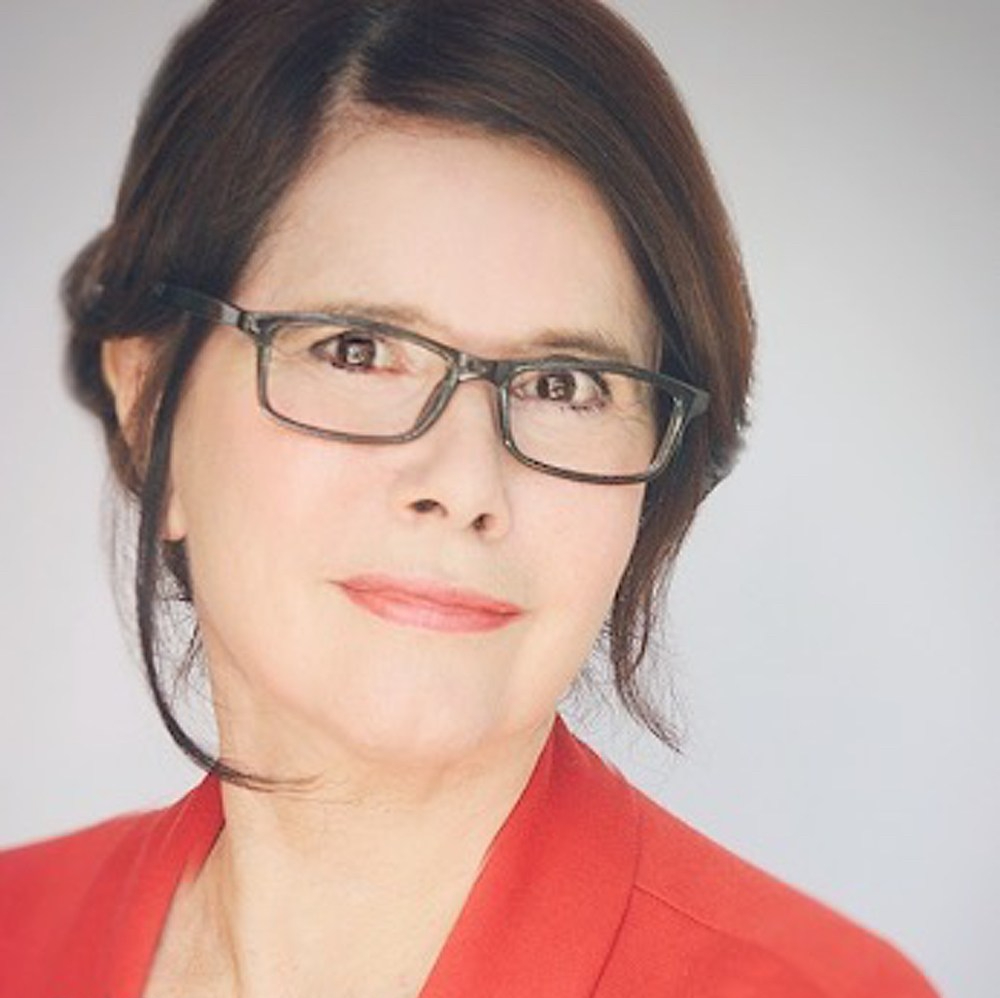
Marjorie is a California writer and UCLA Theater graduate whose career began in the heart of the film industry. She worked in film production and location casting on dozens of films, including Misery, Paul Thomas Anderson’s Hard Eight, and Showgirls. Transitioning from the studio to the classroom, she became a credentialed English teacher, serving secondary students in East Los Angeles and the San Fernando Valley.
Seeking a creative outlet to balance the demands of lesson planning, Marjorie turned to fiction. She is the author of three novels: The Demon Rift, a horror story set on Christmas Eve 2004 where mallrats must defend the universe from a demonic invasion; Babylon Dreams, a science fiction exploration of a virtual reality “after-death” where buried memories dictate the truth; and its sequel, The Dark Side of Dreams, which sees that VR paradise transform into a hell-scape preying on the 23rd century. Her non-fiction work on the nature of dreams, including “To Sleep, Perchance to Dream” and “Why We Believe Dreams are so Real While We’re Dreaming,” has been featured in HuffPost.
Links
A horror novel:
Huff Post Articles:

